
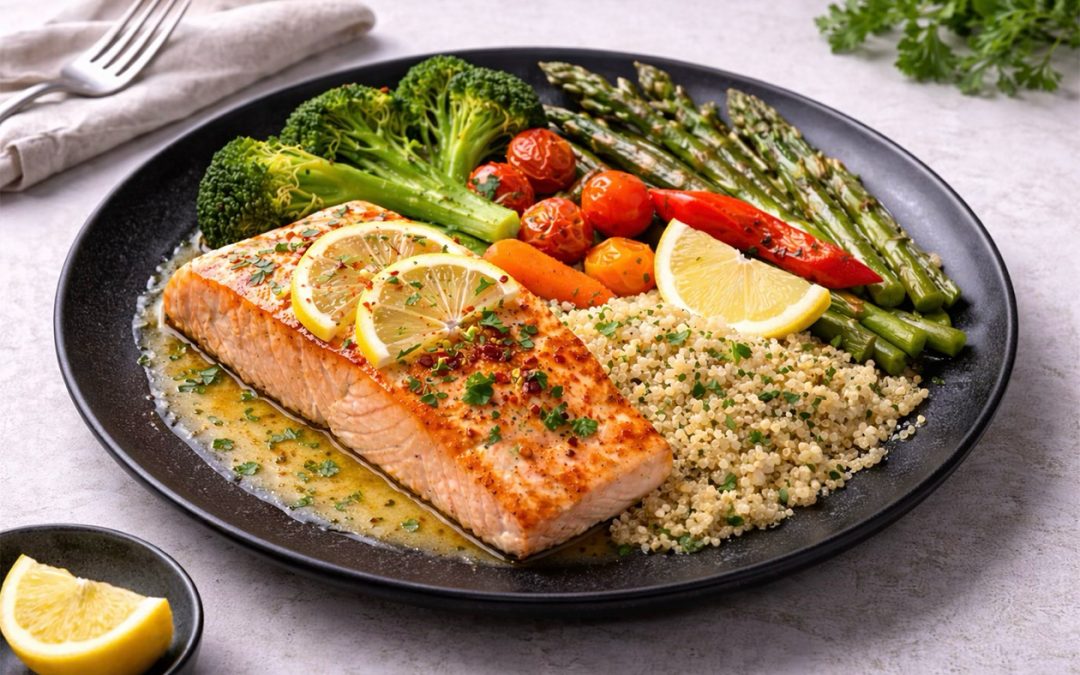
A Modern Gent blueprint to eat for energy, leanness, and long-term performance—without living on salads or tracking every gram.
Hero Pull-Quote:
“The most powerful health upgrade in 2026 isn’t a new supplement—it’s a repeatable eating pattern you can execute on your busiest week.”
The 2026 shift: “Food as medicine” goes mainstream
Food-as-medicine is rising because people are tired of extremes: restrictive diets, biohacking noise, and “miracle” products. The new center of gravity is evidence-based nutrition patterns that support cardiometabolic health, mood, energy, and body composition—without turning life into a lab.
This is not about treating disease on your own. It’s about doing what the best science consistently supports: build a diet pattern that makes the healthy choice your default, most of the time.
The Modern Gent definition: “Food as medicine”
Food as medicine = the deliberate use of food patterns to improve measurable health outcomes (energy, sleep quality, blood pressure, A1c/glucose trends, lipids, inflammation markers), ideally with clinical guidance when needed.
The key word is pattern. The American Heart Association’s dietary guidance is explicit that overall dietary pattern matters more than obsessing over single “superfoods.”
The 5-lever blueprint (a high-performance approach you can sustain)
Lever 1: Build the plate first; optimize later
Start with a structure that works at home, restaurants, airports, and client dinners.
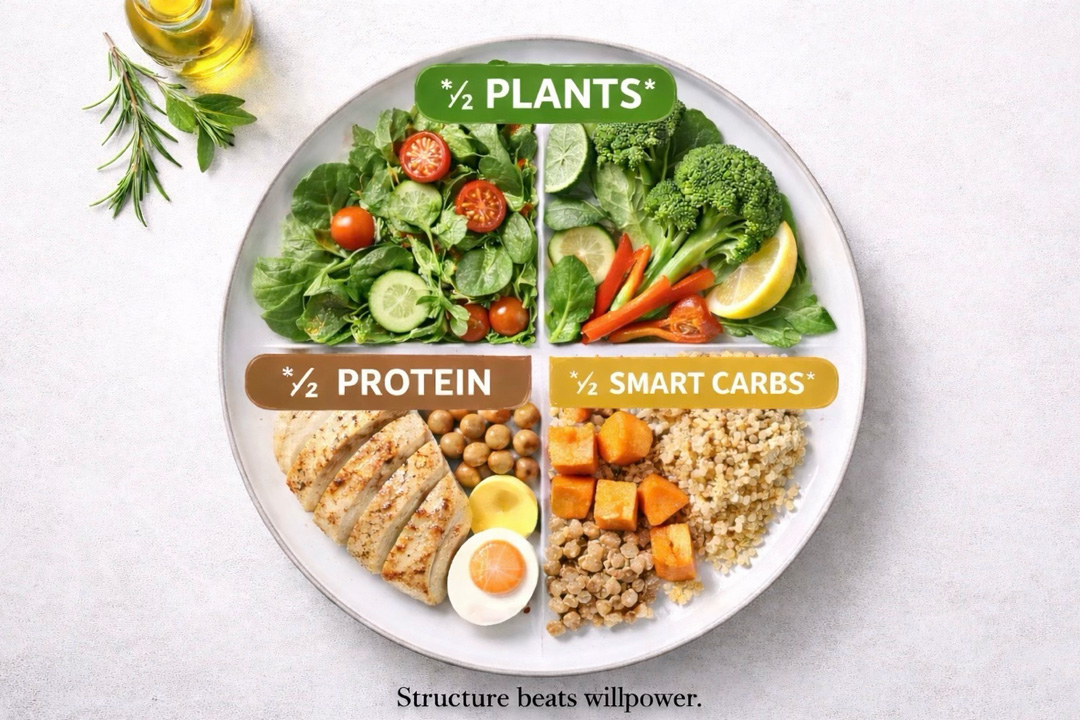
A simple anchor is “half plants,” consistent with USDA’s MyPlate guidance: prioritize fruits/vegetables, include whole grains, and vary proteins.
Your default plate:
- ½ plate: vegetables + fruit (mostly vegetables)
- ¼ plate: protein (lean animal or plant)
- ¼ plate: high-quality carbs (whole grains, beans, potatoes) or extra vegetables, depending on your goals
- Fat lever: olive oil, nuts, avocado—measured by intent, not fear
Lever 2: Protein + fiber are your “executive function” nutrients
If your meals are missing one of these, you’ll pay for it at 3 p.m.
Fiber is strongly associated with better cardiometabolic outcomes and the commonly referenced adequate intake is about 25 g/day for women and 38 g/day for men (or ~14 g per 1,000 kcal).
Practical targets (no tracking required):
- Protein: include a clear protein portion at every meal
- Fiber: add one fiber-forward item per meal (berries, beans, lentils, oats, high-fiber veggies, chia, whole grains)
Easy “fiber adds” that don’t feel like dieting:
- Greek yogurt + berries
- A side of lentils/beans
- Oats or high-fiber whole-grain toast
- A bagged salad kit upgraded with olive oil + protein
Lever 3: Reduce ultra-processed foods (UPFs) by design, not discipline
The goal is not perfection—it’s reducing the percentage of your day that’s driven by engineered convenience calories.
Large-scale evidence summaries associate higher UPF exposure with higher risk across multiple adverse outcomes, especially cardiometabolic and mortality outcomes.
Modern Gent rule:
If it’s engineered to be eaten mindlessly, don’t make it your default.
Keep convenience—just upgrade it:
- Rotisserie chicken, pre-washed greens, frozen veg, canned beans, microwave rice can be building blocks.
- The problem is the “hyper-palatable” loop: chips, sweets, sugary drinks, and snack-food-as-meals.
Lever 4: Win the label game (added sugar + sodium)
Two numbers quietly sabotage most “pretty good” diets: added sugars and sodium.
The FDA’s nutrition guidance notes the Dietary Guidelines recommend limiting added sugars to <10% of daily calories and explains how to use the label’s “Added Sugars” line.
On sodium, CDC notes average intake is well above the common federal guideline of <2,300 mg/day for teens and adults.
Label literacy in 30 seconds:
- Added sugar: if it’s high per serving, it’s dessert—treat it like dessert
- Sodium: “healthy” packaged meals can quietly stack sodium
- Ingredient list: the longer and stranger, the more you should question it
Lever 5: Choose one proven pattern and run it like a program
For most Modern Gent readers, the most defensible “food as medicine” pattern is Mediterranean-style eating: plants, olive oil, legumes, fish, nuts, and minimal ultra-processed staples. Large clinical trials have shown fewer major cardiovascular events among high-risk individuals assigned to Mediterranean diets supplemented with extra-virgin olive oil or nuts.
You don’t need to be precious about it. Make it your house style:
- Olive oil as the default fat
- Fish a few times per week (or plant proteins if preferred)
- Nuts/fruit as snacks, not snack foods
- Vegetables as the baseline side dish
The Modern Gent pantry (15 staples that make “healthy” automatic)
Proteins: eggs, Greek yogurt, rotisserie chicken, canned tuna/salmon, tofu/tempeh
Fiber + carbs: oats, lentils/beans, whole-grain bread or brown rice, potatoes
Plants: bagged greens, frozen vegetables, berries, citrus
Fats + flavor: extra-virgin olive oil, mixed nuts, vinegar, spices, mustard
The restaurant order formula (works anywhere)
Protein: steak, chicken, fish, tofu, beans
Two vegetables: salad + a cooked veg
One smart carb (optional): potato, rice, whole grain, beans
Sauces on the side (you control the dose)
Drink: sparkling water first, then decide
“Healthy” red flags (how people accidentally eat like a teenager)
Smoothies that are basically dessert
Granola-as-a-food-group
“Protein bars” with candy macros
Salads drowning in sweet dressings
Daily “treat coffee” that’s a milkshake
A 7-day template (no tracking, no drama)
Use this as a repeatable operating system. Rotate proteins and vegetables; keep the structure.
Breakfast (choose 1):
- Greek yogurt + berries + nuts
- Eggs + sautéed greens + whole-grain toast
- Oats + chia + fruit
Lunch:
- Big salad + protein + olive oil + a carb if needed (beans or a grain)
Dinner:
- Protein + two vegetables + olive oil + optional carb
Snacks (if needed):
- Fruit + nuts, cottage cheese, hummus + veg, or a simple protein shake
What to measure (so “food as medicine” stays real)
If you want this to be medicine, you need feedback—preferably with your clinician if you have risk factors.
Practical markers to discuss with a professional:
- Blood pressure trends
- Lipids (especially ApoB/LDL, if your clinician supports it)
- A1c / fasting glucose (and optionally CGM for selected cases)
- Waist circumference + strength performance
- Sleep quality and alcohol tolerance (often the first “tells”)
Closing: the Modern Gent standard
“Food as medicine” in 2026 is not a cleanse or a cult. It’s a repeatable, adult eating pattern built on:
- plate structure,
- protein and fiber,
- fewer ultra-processed defaults,
- label literacy for sugar and sodium,
- and a proven pattern (Mediterranean-style) executed consistently.
Treat it like tailoring: the fundamentals never go out of style—only the details change.